
West Africa’s Cocoa Crisis Deepens: What It Means for the Region
Ivory Coast is considering reducing the price paid to cocoa farmers, following Ghana’s recent decision to cut its farmgate price by over 30% to approximately 41,000 cedis (around $3,700) per tonne.
Ghana justified the move as a necessary step to stabilise its cocoa sector amid declining global prices and mounting financial pressure. Now, Ivory Coast, the world’s largest cocoa producer, is facing similar challenges. An inter-ministerial committee has been convened to assess the situation, as falling international prices have left the national cocoa purchasing system strained, with delayed payments to farmers and growing unsold stockpiles.
Together, Ivory Coast and Ghana account for roughly 60% of global cocoa production. Any coordinated or parallel price adjustments between the two countries have immediate and far-reaching consequences for the global chocolate supply chain.
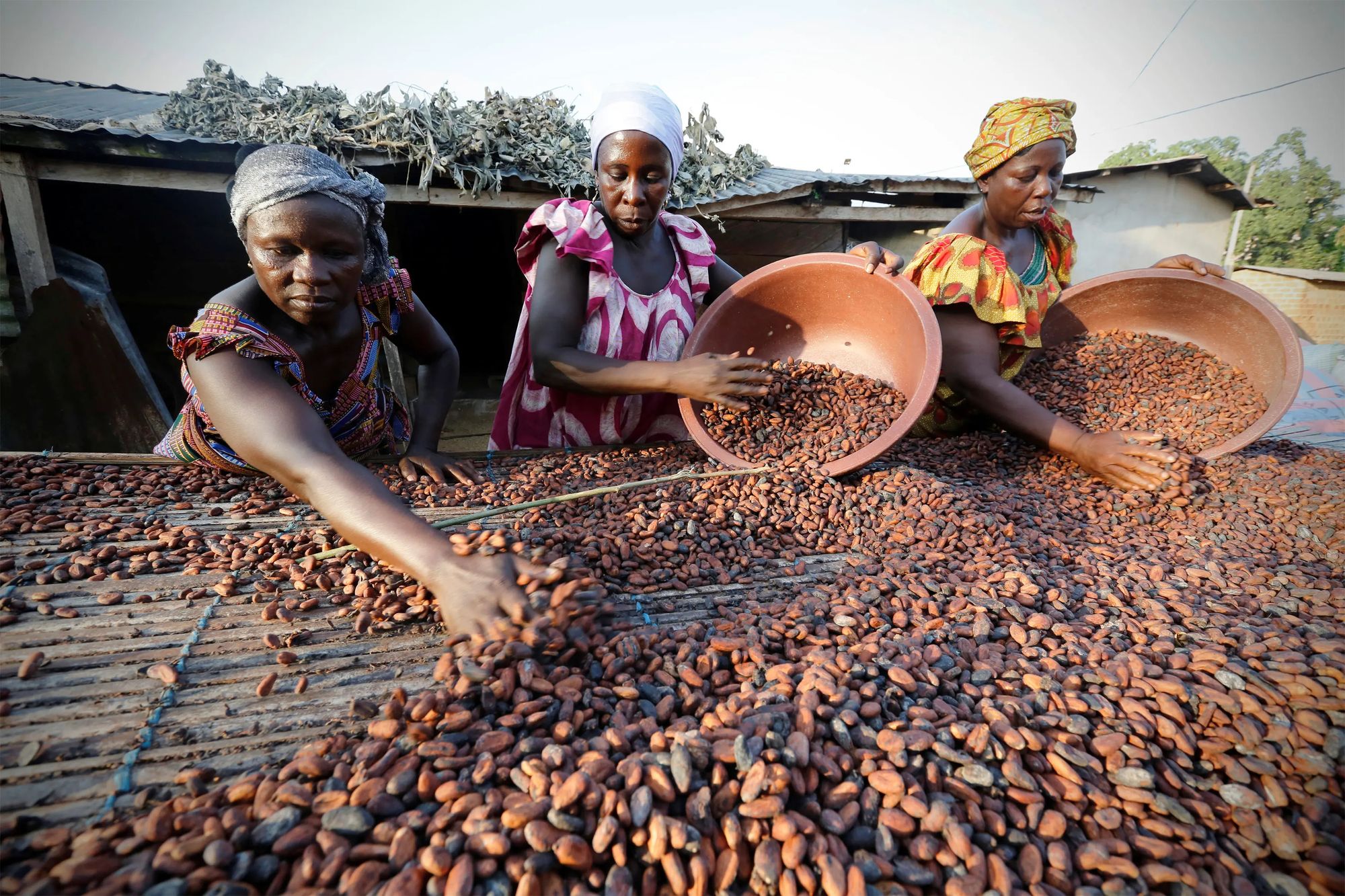
But the real story goes beyond pricing, it’s about structural vulnerability.
For farmers across West Africa, a reduction in farmgate prices directly translates into shrinking incomes in already fragile rural economies. This raises serious concerns:
- Increased poverty levels in cocoa-dependent communities
- Higher risk of child labour, as households compensate for lost income
- Reduced investment in farm maintenance, threatening future production quality and yields
Cameroon, though a smaller producer, is not insulated.
As the fourth-largest cocoa producer in Africa, Cameroon operates within the same global pricing ecosystem. A downward price trend led by Ghana and Ivory Coast will likely:
- Put pressure on Cameroonian farmgate prices
- Affect export revenues and foreign exchange earnings
- Challenge government efforts to stabilise and professionalise the cocoa sector
For Cameroon, this moment presents both a risk and an opportunity, to rethink value addition, strengthen local processing, and reduce dependence on volatile international commodity pricing.

The broader implication?
West Africa continues to supply the bulk of the world’s cocoa, yet captures only a fraction of its value. These recurring price shocks highlight the urgent need for:
- Regional coordination beyond pricing announcements
- Stronger local processing industries
- Fairer global trade structures
Without structural reforms, farmers will remain at the mercy of global price swings and the sustainability of the cocoa sector itself will be at risk.